Publications

The Brazilian Institute for the Environment and Renewable Natural Resources (Ibama) published on August 14, 2018, Normative Instruction (IN) No. 18/2018, in order to allow more covered parties to join the fines conversion program. The new standard changes the transition rules set out in IN 06/2018 and, in practice, extends to 60 days the period originally established for covered parties to submit their requests to convert fines. With the change, adherence to the program may be requested until October 15, 2018.

Polychlorinated biphenyls, known as PCBs, are synthetic substances formed by a mixture of 209 chlorinated compounds. The Stockholm Convention, of which Brazil is a signatory, has classified PCBs as one of the twelve types of persistent organic pollutants (POPs), which are extremely polluting substances, which pose serious risks to the environment and human health and which should be phased out, according to the convention.

The Attorney General's Office (PGR) opined in October in favor of hearing and granting relief to Extraordinary Appeal (RE) 1037396, in order that article 19 of Law No. 12,965/2014, the Brazilian Civil Rights Framework for the Internet, be declared constitutional by the Federal Supreme Court (STF).

Law No. 13,467/17 (the Labor Reform) inserted article 652, f, into the Consolidated Labor Laws (CLT), thus expanding the jurisdiction of the Labor Courts to decide on the ratification of extrajudicial settlements. However, even with this change, parties (companies and workers) are having difficulty having these settlements ratified at trial level, since the judges allege the supposed unconstitutionality of article 652, f, of the CLT.
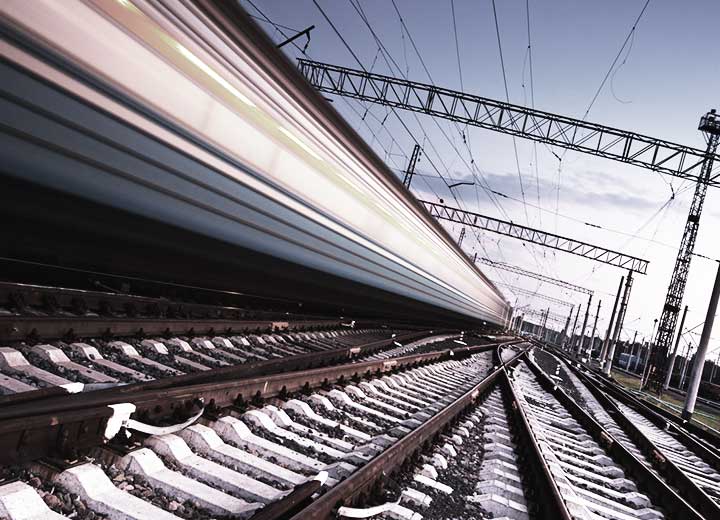
In September, BNDES approved four credit transactions for three different companies in the rail sector, totaling almost half a billion Brazilian Reais for the revitalization of lines, maintenance of equipment, and purchases of new railcars and machinery. This measure is in line with the new governmental policies and directives for the promotion of the railway sector, which, since 2007, when the North Section of the North-South Railroad was subject to a sub-concession, has been suffering from a lack of consistent privatization projects.

The infrastructure financing sector in Brazil has undergone significant structural and strategic changes in the last two years. These changes were mainly focused on the strategic redefinition of the National Economic and Social Development Bank (BNDES), which has gradually withdrawn from its centralizing role in financing transactions to assume a profile more complementary to the capital market, with new financing conditions and the adoption of the Long-Term Rate (TLP), which replaced the Long-Term Interest Rate (TJLP).
Page 199 of 238